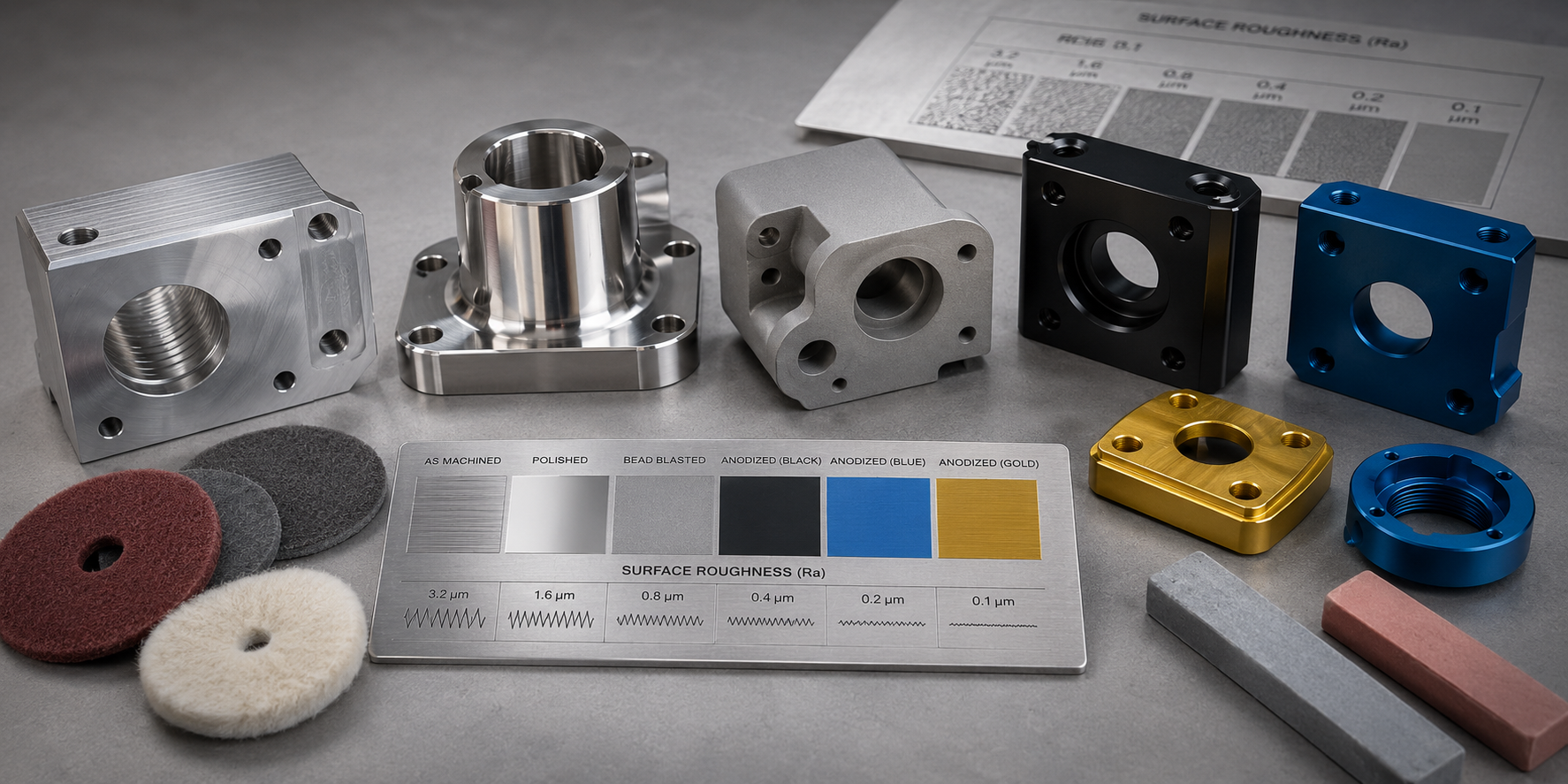
Surface finishing is where performance, aesthetics, corrosion resistance, and manufacturability meet. Yet many drawings still specify finish in a way that leaves room for costly misunderstanding.
A strong finishing strategy identifies which surfaces matter, what each surface must do, and how the machining and post-processing steps support that outcome.
Start with function and visibility
Not every face on a part needs the same finish level. Sealing surfaces, sliding interfaces, cosmetic exteriors, and hidden internal geometry all justify different priorities.
Separating functional finish requirements from visual expectations helps suppliers target effort where it delivers real value.
- Call out critical surfaces individually instead of globally.
- Distinguish cosmetic standards from technical roughness requirements.
- Use sample approval for appearance-sensitive parts.
Coordinate machining and post-processing
Machined surface condition affects how a coating or treatment looks afterward. Tool marks, burrs, and edge break quality all influence anodizing, bead blasting, painting, and passivation outcomes.
The most reliable results come when the machining route is planned with the finishing route in mind instead of treating finishing as a separate final step.
- Review edge condition before anodizing or painting.
- Confirm coating thickness on tolerance-sensitive features.
- Use finish samples to align visual expectations early.
Specify only what the part needs
Premium finish requirements add time in machining, deburring, inspection, and handling. If the application does not benefit from that effort, the specification may be inflating cost without improving performance.
A practical finish note focuses on the few surfaces that truly matter and leaves the rest at a standard commercial level.
- Avoid blanket Ra requirements across the whole drawing.
- Reserve fine cosmetic finishing for customer-facing surfaces.
- Ask suppliers to suggest commercial-standard alternatives where appropriate.