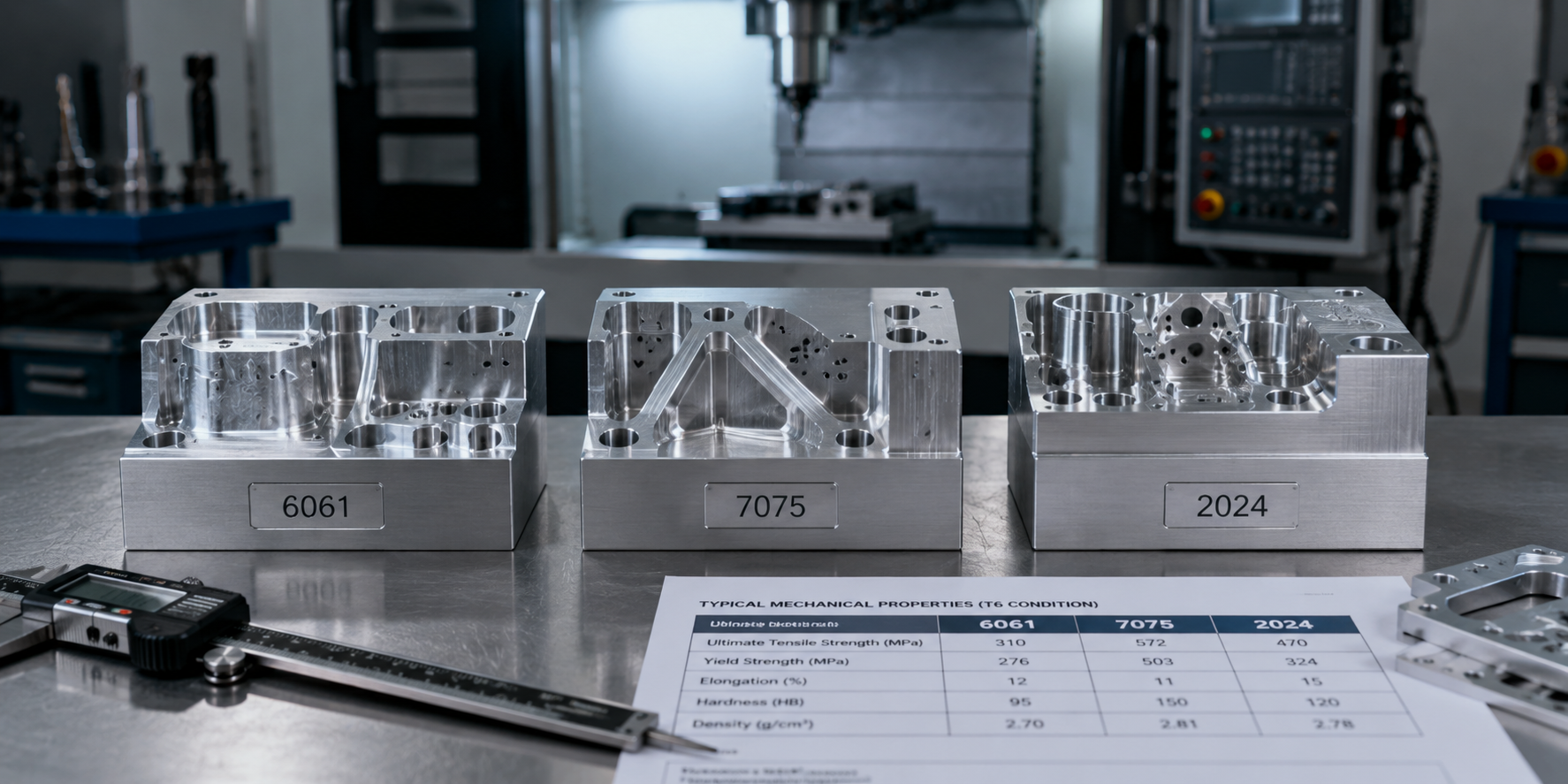
Choosing the right aluminum alloy is a design decision with direct impact on machining cost, structural performance, finishing behavior, and long-term reliability.
6061, 7075, and 2024 are all common aerospace and industrial choices, but they solve different problems. The best option depends on your loading conditions, environment, and manufacturing priorities.
When 6061 is the right choice
6061 is often the most forgiving option for general engineering components. It offers a useful mix of strength, machinability, weldability, and corrosion resistance at a practical price point.
For housings, fixtures, brackets, and cosmetic machined parts, 6061 usually delivers the best balance of performance and manufacturing efficiency.
- Strong default choice for general-purpose precision parts.
- Anodizes well and supports good cosmetic finish.
- Often the most economical option across machining and finishing.
Where 7075 earns its premium
7075 is chosen when strength-to-weight ratio is the driving factor. It is common in aerospace structures, high-load fixtures, and performance components where 6061 does not provide enough margin.
The tradeoff is higher material cost, reduced corrosion resistance compared with 6061, and tighter attention to finishing and stress-related design details.
- Best fit for high-load, weight-sensitive applications.
- Higher raw material cost should be justified by performance need.
- Protective finishing matters more in demanding environments.
Why 2024 still matters
2024 is often overlooked outside aerospace, but it remains attractive where fatigue resistance and structural performance are important. It can be a smart choice for parts that see repeated load cycles.
Its main limitation is corrosion behavior, so environmental exposure and finishing strategy should be reviewed carefully before release.
- Useful for cyclic loading and aircraft-style structural parts.
- Requires more care around corrosion protection.
- Not always the cheapest to support through the full lifecycle.