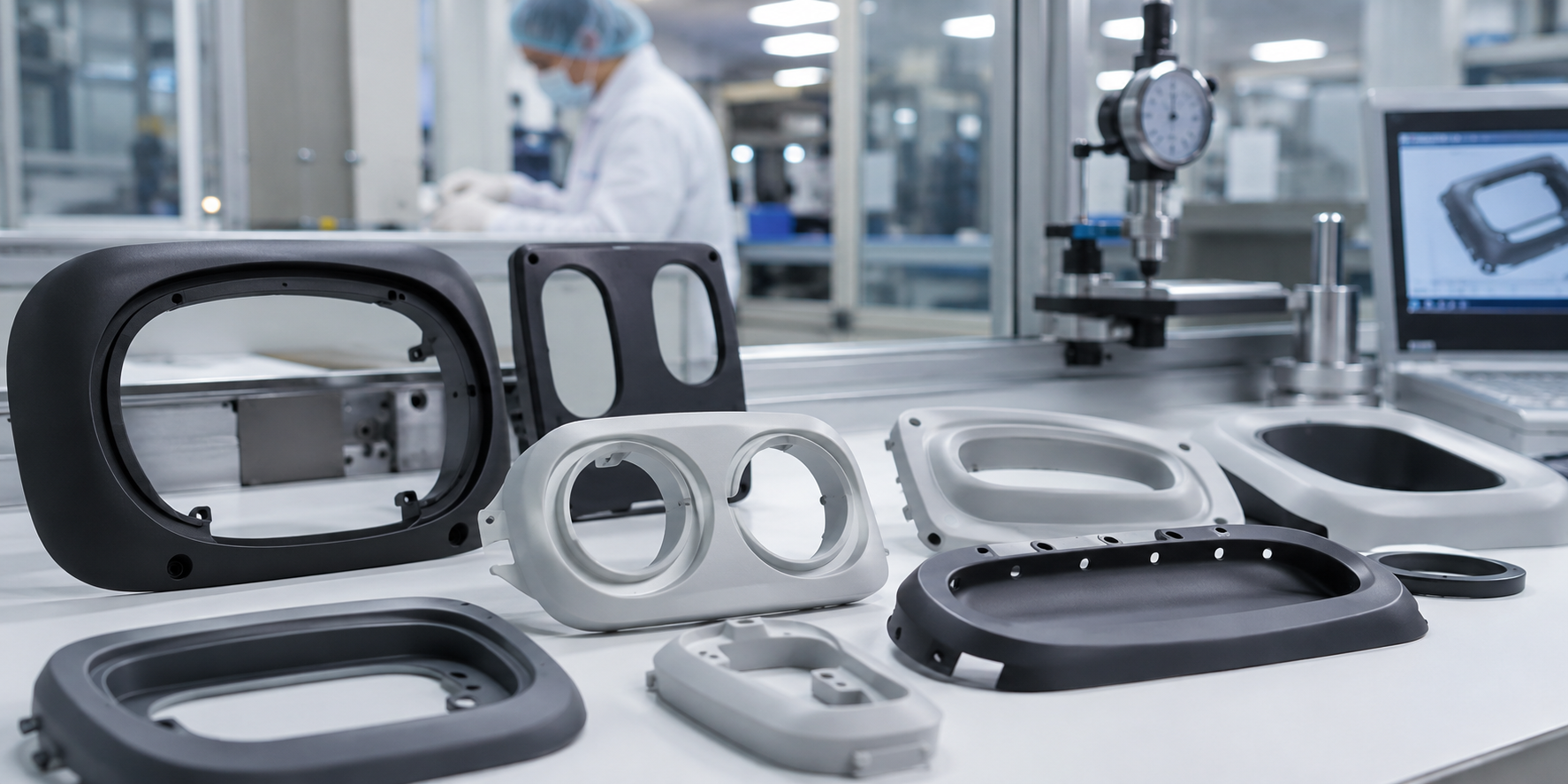
Visible aerospace interior parts are judged on both compliance and appearance. This bezel program required a molding route that could support flame-retardant material behavior without producing a part that looked over-processed or inconsistent in the cabin environment.
Low volume did not reduce expectations. If anything, it raised them, because every part remained highly visible and documentation still mattered.
Solution Snapshot
We aligned resin choice, tool surface strategy, and inspection focus around the realities of aerospace-style low-volume production, where quality expectations are high and every part remains visible.
Material and appearance in tension
Flame-retardant resins can introduce their own molding and cosmetic challenges, especially when the part is customer-facing and finish quality matters. The bezel therefore needed a process that respected both compliance and appearance.
Dimensional fit for panel integration added a second layer of risk, since visible gaps or stress during installation would have undermined the program even if the resin requirement was met.
- Flame-retardant material behavior affected molding and finish.
- Visible cabin installation demanded strong cosmetic control.
- Low-volume production still required disciplined documentation.
Aerospace-style molding discipline
We matched tool-surface planning and molding conditions to the selected resin so the part could achieve the required matte appearance without sacrificing dimensional predictability. Inspection focused on visible surfaces and panel-fit drivers rather than generic measurement alone.
The result was a manufacturing route tailored to the actual use case rather than a standard commercial plastics workflow.
- Tool and process tuned to resin-specific finish behavior.
- Inspection aligned to visible quality and installation needs.
- Production method adapted for aerospace-style expectations.
End result
The customer gained a bezel program that balanced regulatory awareness with the fit and finish expected in aircraft interiors. That lowered the burden on their own integration team and supported smoother downstream approvals.
The project highlights how material compliance and presentation quality must be developed together, not sequentially.
- More confidence in cabin-part presentation and fit.
- Lower integration friction for the customer team.
- A repeatable model for future aerospace interior plastics.